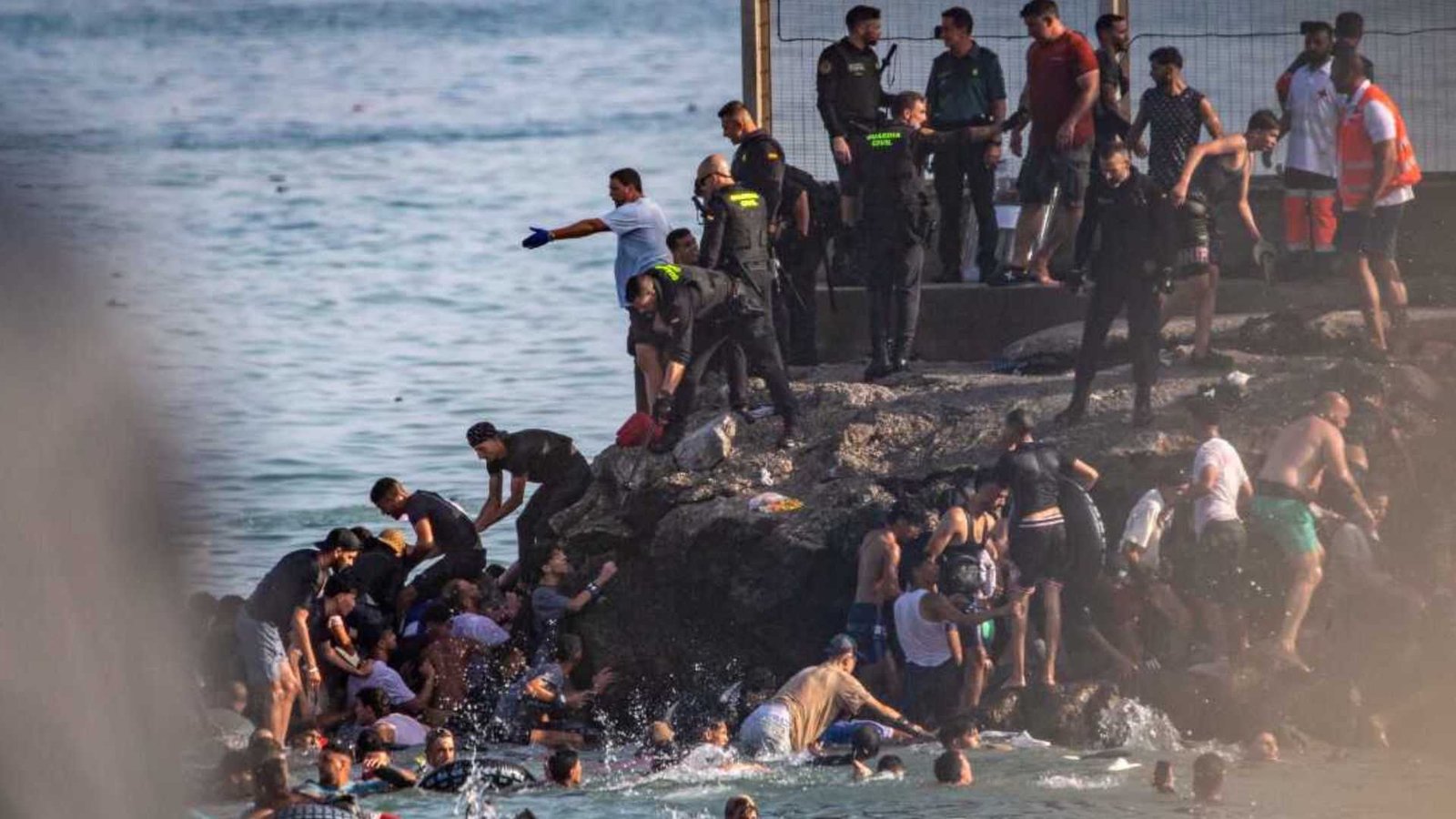
The Morocco–Spain migrant crisis has, once again, drawn global attention after a pretty dramatic surge in crossings into the Spanish enclave of Ceuta. In late July 2026, tens of thousands of migrants crossed from Morocco into the territory by land and sea , overwhelming local authorities and then leading to dozens of deaths during that dangerous journey. The incident has quickly become one of Europe’s most significant migration emergencies in recent years, and it’s now fueling urgent questions about border security , humanitarian protection, and also the underlying causes that push people to gamble everything for a shot at a better future.
While the images of overcrowded beaches, military deployments, and exhausted families dominate headlines, the crisis is a lot more tangled than a sudden dash across a border. It’s the result of a mix of economic hardship, established migration networks, certain legal changes, and older geopolitical tensions between Morocco and Spain , that never really went away.
This article breaks down what the Morocco–Spain migrant crisis is, why so many people are attempting the trip, and what it could mean for Europe overall.
What Is the Morocco–Spain Migrant Crisis?
The crisis is basically a large-scale movement of migrants from Morocco into Ceuta , a Spanish autonomous city sitting on the northern edge of Africa.
Even if Ceuta is on the African continent, it is part of Spain, and therefore part of the European Union. Along with the nearby Spanish enclave of Melilla, Ceuta is the EU’s only land border with Africa, and that makes it a key gateway for people hoping to reach Europe.
In July 2026 , authorities said that around 60,000 people entered Ceuta within roughly 24 hours, with many swimming around coastal barriers or crossing by land. At least 34 people lost their lives, according to regional authorities, and it’s that point that made the whole situation feel even more severe , and harder to absorb.
Why Are People Fleeing to Spain?
Honestly, there isn’t one neat reason behind the Morocco–Spain migrant crisis. It’s more like a bunch of things, stacked together, and then somehow they all line up at the same time, producing what we’re seeing now. Factors like the economy, borders, rumor networks, and old survival logic all get tangled in there.
1. Economic Hardship
For a lot of migrants, the whole push starts with the idea that maybe Europe means work, and not just any work but steady employment, plus financial steadiness that actually lasts.
Young people from Morocco and migrants from other African countries often see Europe as a place with:
- Better wages
- Higher standards of living
- Learning and education paths
- More reliable healthcare
- Improved economic safety
When unemployment keeps rising and living costs get harder every year, Spain starts to look like a gateway to a more solid future, or at least a shot at one.
2. Spain Is Seen as a Gateway to Europe
Ceuta is Spanish territory, so getting there can be, basically, the first move toward reaching mainland Spain and then maybe other parts of the European Union.
Even though stepping into Ceuta does not automatically give someone the right to stay in Europe, many migrants still think it improves the odds of two things: asking for asylum, or continuing the journey onward.
Because of this, Ceuta has been treated like one of the most appealing routes into Europe,even if the reality is more complicated than that.
3. Smuggling Networks and Misinformation
Spanish officials say that smuggling networks, and human trafficking systems, helped spark the recent increase.
Prime Minister Pedro Sánchez also claimed that criminal groups spread confusing interpretations of a recent Spanish Supreme Court decision tied to people arriving by sea. The allegation was that this made migrants think that entering Ceuta could make deportation less likely. Still, activists have pushed back, saying that it’s not clear most migrants would have even known about the legal changes like that, or understood them in the first place.
4. Dangerous Sea Crossings
Many migrants try to swim a few kilometres out from Moroccan coastal places like Fnideq, toward Ceuta, while others attempt to clamber over border barriers or find a way around them.
These crossings are really risky, mainly because there are strong sea currents, the water is cold , there is overcrowding, people start to panic mid crossing, and many have only limited swimming ability.
Some reports say that during the recent crisis, a large number of those who died, drowned, and others got trapped in crowd crushes near border facilities.
Why Is Ceuta So Important?
Ceuta has a kind of special geographical and political position.
Even though Ceuta sits in North Africa, the city has been managed under Spanish administration for centuries. Morocco still argues that it has sovereignty over Ceuta and Melilla, so the cities keep turning into regular diplomatic tension points between the two states.
And since Ceuta is part of the European Union, it’s also become one of Europe’s most clearly visible outer border areas.
Spain’s Response to the Crisis
The Spanish government reacted by, deploying more military and security personnel, stepping up border patrols, speeding up the return of migrants to Morocco where that’s allowed by law, and providing emergency humanitarian aid.
Prime Minister Pedro Sánchez visited Ceuta during the crisis, calling the mass crossings a breach of Spain’s territorial integrity, and at the same time stressing that order needed to be restored.
Morocco’s Response
Moroccan authorities also raised security actions along the border.
According to reports, Moroccan security forces used water cannons and tried to block more attempts, while pushing the crowds away from border zones. In some places clashes broke out, because officials were trying to regain control and keep the situation contained.
The Bigger Picture
Migration across the Mediterranean and into Southern Europe has been a long standing issue, still it doesn’t feel “resolved” ever.
Experts usually point to a mix of causes, like economic inequality , youth unemployment , population growth, regional instability , human trafficking networks and also the geographic proximity between North Africa and Europe.
Even if border enforcement can reduce crossings for a short time, a lot of analysts say that, for the longer run, it takes more international cooperation, more economic development, clearer legal migration pathways, and tougher action against criminal smuggling organizations.
stay updated on the Latest News and Articles. Or follow us on social media for daily Islamic reminders.
Frequently Asked Questions
What is the Morocco–Spain migrant crisis?
It describes the large scale movement of migrants from Morocco into the Spanish enclave of Ceuta, which creates humanitarian pressures and serious border management challenges too.
Why are migrants trying to reach Spain?
Many are looking for employment, safety better living conditions, educational opportunities, and in some cases a pathway into the European Union.
Why is Ceuta important?
Ceuta is a Spanish territory located in North Africa and it also functions as one of the European Union’s few land borders with Africa.
How dangerous is the journey?
It can be extremely dangerous, people often try long swims or complicated border crossings. And in recent incidents, dozens of deaths have been reported.
What is Spain doing?
Spain has added security personnel, increased border controls, provided emergency humanitarian assistance, and it has continued migrant returns in line with applicable law, even when the situation is intense.
Conclusion
The Morocco–Spain migrant crisis is more than a border emergency i t kind of shows deeper economic, humanitarian, and political headaches that hit both North Africa and Europe at the same time. Sure, the images of mass crossings into Ceuta get most of the attention, but underneath it all the causes seem tied to limited livelihood options, unsafe migration routes, organized smuggling channels, and also the special geopolitical setup of Spain’s North African enclaves. As Spain , Morocco and the European Union react to the newest developments, it becomes clear the response needs to be balanced, meaning it should improve border management yet still protect human life and take on the original pressures that keep pushing people into risky journeys. The whole situation is still moving, and quite a few details may change as officials publish more checked, verified information.

![Islamic Dietary Laws Muslim Dietary Restrictions [HalalHaram Guide]](https://wordofprophet.com/wp-content/uploads/2026/07/Islamic-Dietary-Laws-Muslim-Dietary-Restrictions-HalalHaram-Guide.jpg)